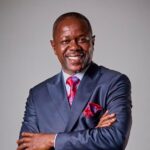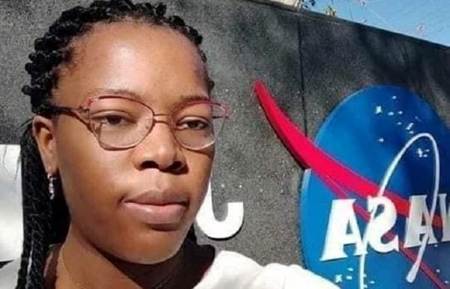
In the high-stakes effort to understand and combat climate change, Dr. Babette Christelle Tchonang has emerged as a vital voice in physical oceanography. As a scientist at NASA’s Jet Propulsion Laboratory (JPL), Tchonang uses satellite technology to monitor the “pulse” of our oceans, providing the data necessary to predict the future of our planet’s climate.
Early Life and Academic Journey
Tchonang’s path to the stars began with a deep fascination for the physical world. She began her academic career at the University of Dschang, where she earned a Bachelor’s degree in Physics in 2014.
Driven by an interest in environmental dynamics, she moved to the University of Yaoundé I for her initial Master’s work before venturing abroad. Her specialized training took her to the University of Abomey-Calavi in Benin and eventually to Paul Sabatier University (Toulouse III) in France, where she earned both a Master’s and a PhD in Physical Oceanography.
The Mission: Watching the Water from Space
At NASA, Tchonang is a key player in the SWOT (Surface Water and Ocean Topography) mission. This satellite is a game-changer for Earth science, capable of measuring the height of water in the world’s lakes, rivers, and oceans with unprecedented precision.
Her work focuses on mesoscale and sub-mesoscale ocean variability—essentially the small-to-medium-sized swirls and currents that play a massive role in how the ocean absorbs heat and carbon dioxide.
- Data Assimilation: She develops complex algorithms to integrate satellite data into ocean forecasting models.
- Climate Indicators: By tracking how ocean waters expand and move, she provides policymakers with the “vital signs” of global warming.
- Global Reach: While her office is in California, her research directly impacts the sustainable management of coastal zones in Africa, particularly in the Gulf of Guinea.
Through her work at NASA, she ensures that the story of our planet’s oceans is told with accuracy, helping the world navigate the rising tides of a changing climate.
A Global Career of Excellence
Before joining NASA in February 2022, Tchonang’s research took her to some of the world’s most prestigious scientific institutions:
- Germany: At the Alfred Wegener Institute, she studied the influx of warm water into the Antarctic ice shelves.
- France: At Mercator Ocean International, she helped refine global ocean forecasting systems.
Impact and Legacy
Dr. Tchonang is not just a researcher; she is a trailblazer for African women in STEM. She frequently advocates for the importance of education, famously stating that the goal is not merely personal success but the impact of knowledge on humanity. She also leads the Gulf of Guinea Ocean Sciences Summer School (GGOSSS), a program designed to mentor the next generation of African oceanographers.
The GGOSSS Initiative: Key Details
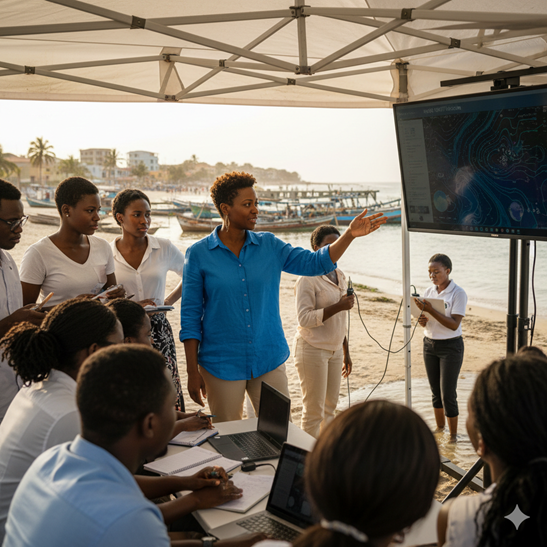
Dr. Babette Christelle Tchonang is a leading architect of the Gulf of Guinea Ocean Sciences Summer School (GGOSSS), a flagship initiative designed to empower the next generation of African oceanographers. This program is a cornerstone of her commitment to “capacity building”—the idea that African scientists should have the tools and training to solve African environmental challenges.
The program is an annual, intensive training school specifically targeting students and early-career researchers from French-speaking countries in the Gulf of Guinea (including Cameroon, Benin, Togo, Côte d’Ivoire, Congo, and Senegal).
- Inaugural Session (2025): The first edition was held at the University of Dschang in Cameroon. Despite the university being in a highland region, the location was chosen to prove that ocean science is critical for everyone, not just those living on the coast. It trained 36 young scientists with the help of 12 international experts.
- Next Session (2026): The second edition is scheduled for October 3–9, 2026, in Cotonou, Benin. Cotonou was selected because it is one of the most climate-vulnerable cities in West Africa, facing severe coastal erosion and flooding.
- Curriculum & Skills: Dr. Tchonang’s curriculum moves beyond textbooks to provide “hands-on” technical mastery. Students learn:
- Satellite Remote Sensing: Using data from missions like NASA’s SWOT to monitor sea levels.
- Numerical Modeling: Learning to use the CROCO model to simulate ocean currents and upwelling.
- Python for Science: Training in data analysis and visualization.
- Fieldwork: Participants engage in real-world data collection, such as taking measurements in lagoons and coastal zones.
The “Digital Bridge” to Policy
One of the most unique aspects of the programs Dr. Tchonang leads is the focus on Science-to-Policy. She doesn’t just teach students how to read a graph; she teaches them how to use that data to advocate for coastal resilience.
By fostering a regional network of experts, she is laying the groundwork for a dedicated Centre for Ocean Analysis and Forecasting in Africa. Her goal is to ensure that when African governments make decisions about their coastlines, they are guided by data generated by African scientists.
Support and Inclusivity
To ensure that talent isn’t restricted by finances, the GGOSSS program typically has no registration fee, and organizers often provide accommodation and meals for participants. Dr. Tchonang also places a heavy emphasis on gender equity, strongly encouraging women to apply to bridge the gender gap in physical sciences.