By Princeley Njukang
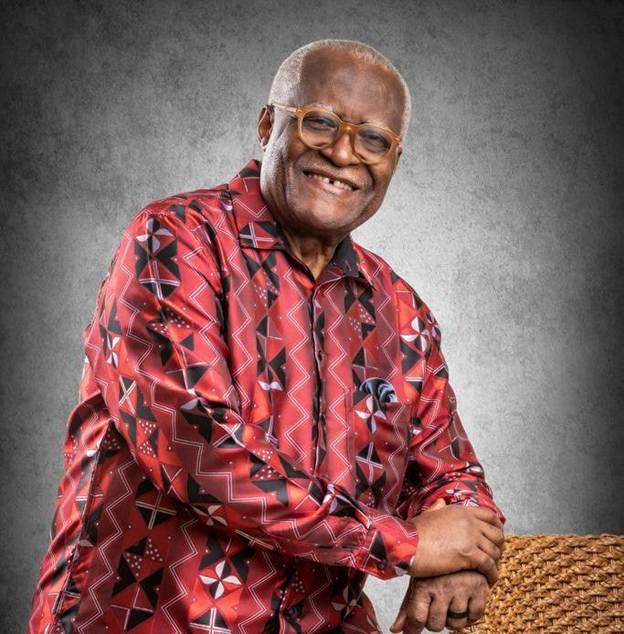
There has been palpable excitement among some Cameroonians following the announcement of a three-man coalition between Akere Muna of Univers, Ateki Seta Caxton of the Liberal Alliance Party (PAL), and Bello Bouba Maigari of the National Union for Democracy and Progress (UNDP). But while we rejoice, it is important to remember that we have been here before.
About 48 hours to the 2018 presidential polls, Muna, candidate of the Popular Front for Development (FDP), said he was withdrawing from the race. Prior to that time, many Cameroonians had been pushing, even praying, for the opposition to unite and pick a strongman among them to go head-to-head with the natural candidate of the CPDM, Paul Biya. Cameroonians knew that running against the well-entrenched party, which is barely distinguishable from the state, would be futile, given the enormity of resources and powers it holds.
Yet the opposition didn’t listen. In September of 2018, an opinion poll by the Nkafu Policy Institute put Muna at the very downward end of candidate rankings, with just 0.2% of voters saying they would vote for him. It is not clear how much of this public opinion played into his stepping down and joining forces with Maurice Kamto of the Cameroon Renaissance Movement (MRC), but what is clear is that the supposed coalition made no difference. It was the right step, taken at the wrong time.
When results of the 7 October 2018 polls were released, Kamto ranked second with about 14%, while Muna got a very small fraction: somewhere around 0.35% of the votes. In literal numbers, about 12,262 people voted for him. Complaints that their attempts to form a coalition had been stifled by the party in power soared. ELECAM was dragged for not respecting their stands. Of course, in a country where power is often said to be concentrated, it was easy to make these claims, because once there is one sinner, everyone around becomes just.
ELECAM told the Constitutional Council that it had transported ballot papers before the so-called Akere-Kamto coalition was announced. They argued that it would have been unreasonable to expect them to start removing the ballot papers of one candidate, a process that could invariably compromise the integrity of the elections. And thus became the fate of the coalition: a series of shy proclamations that did nothing to deter Biya from a landslide victory with 71% of valid votes cast.
This new coalition, between Bello, Caxton, and Muna, carries relics of 2018. In other words, it is bound to fail like that of 2018. First, the communication around the coalition is poor, shy, and perhaps too afraid to break eggshells. Apart from the public appearance in Ebolowa on Tuesday, when Bello announced Muna and Caxton as his allies, and the muffler Muna was seen wearing which said “vote Bello,” there’s much that remains to be known about the said coalition. Muna says he asked Bello three critical questions, including questions on the Anglophone conflict and the form of the state, which he replied to in the affirmative. But how else did he come to the decision? What are the mechanisms put in place to ensure power-sharing? These are no small questions. Ask Sudan.
Moreover, what we have is essentially a coalition of persons, not a coalition of parties, because Univers, the party under which Muna is supposed to be running in 2025, has firmly rejected the coalition. The party’s leader, Prof. Prosper Nkou Mvondo, on Monday said his party and other parties that had rallied behind him to endorse Muna did not recognize the coalition. The party’s campaign envelope was received, and the electoral code mandates that the money be used for campaigning. Whether it is for fear of not being able to justify this money, for dislike of Bello, or for a greedy desire to also say the party ran the race, nobody knows. What is clear, however, is that if the Bello/Muna/Caxton coalition remains drowned in controversies and counter-messaging, it will be nothing more than a corpse on life support.
And finally, the lesson Muna didn’t learn in 2018? When your ballot papers are printed and taken to polling units, there will always be voters that vote for you. For a good number of reasons, the primary one being that the average Cameroonian voter is not an active follower of political occurrences. At best, they know when to register, when to vote, and might often decide whom to vote for way before time, using the rest of their time to battle for survival. Add to that the fact that most communication is done using modern means such as social media, and the complex trouble of the digital divide knocks every effort out the window. So, you choose your emblems, ELECAM has printed and transported. Now, two weeks to the political rendezvous, a coalition is being announced. It is good news, the news of a coalition, but the timing is a tragic redoing of a political undoing.
We had seven years to build a strong coalition. As Gregory Mewanu, CPDM elite and City Mayor of Kumba, told me in July: “We don’t start preparing for elections when they are announced, we start the day results are announced.” If the opposition doesn’t understand that the elections run in circles, it cannot salvage itself by last-minute coalition lines that are only good for newspapers.